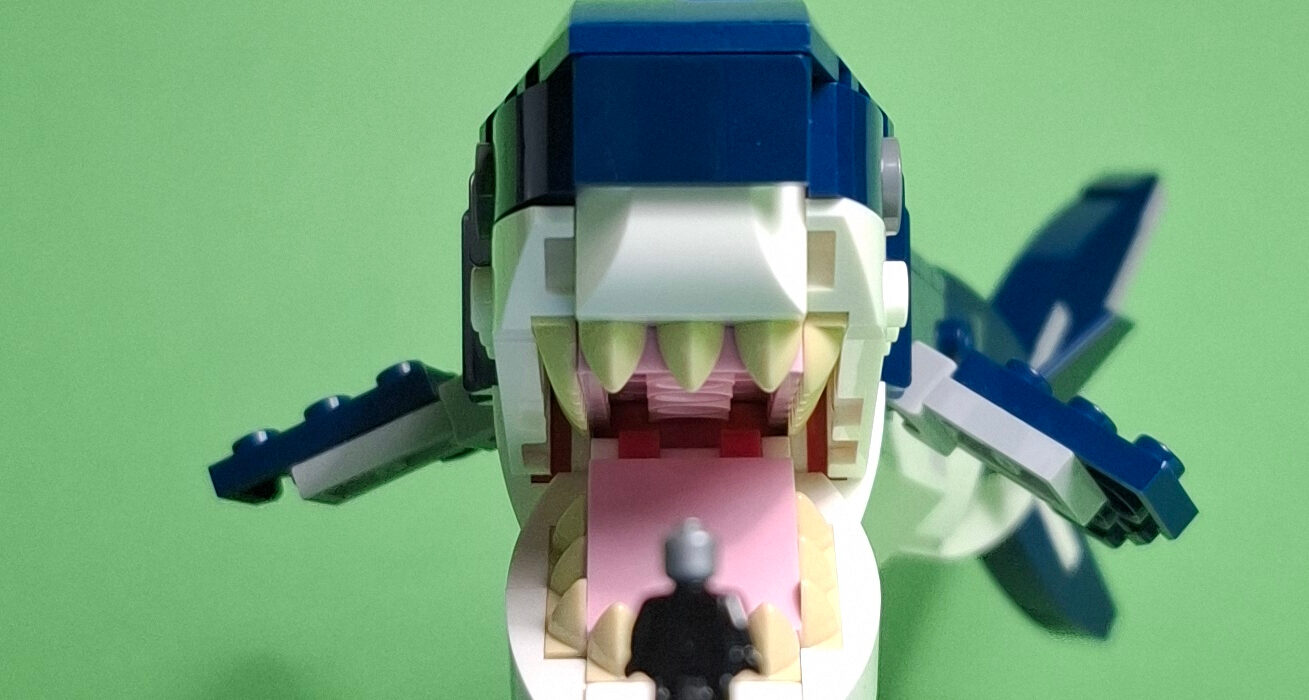
Prototype the emotional experience, the world, and the IP behind your next product before a single frame is shot or a single line of code is written.
via reddit
The Problem Nobody Talks About
Every studio, every game company, every media house has felt it: you greenlight a project, invest months of production, and only afterwards discover that the story doesn’t hold together or worse, that it quietly echoes something the audience has already seen.
The world feels borrowed. The characters feel familiar in the wrong way. The IP that was supposed to be your next signature property turns out to be a well-produced clone. By the time this becomes visible, it’s usually too late and too expensive to fix.
The fix isn’t better production. It’s better prototyping and asking the right questions right from the start before production begins.
Prototyping The Invisible: Emotion, World, Narrative, IP
I use the LEGO® SERIOUS PLAY® method to prototype the parts of a project that are hardest to test on paper: the emotional experience an audience will have, the internal logic of a fictional world, the shape of a narrative, the psychology of characters and ultimately, the distinct identity of your IP and brand.
Where a script, a treatment, or a pitch deck can only describe an idea, LEGO® SERIOUS PLAY® lets a team physically build it. Hands construct what the mind hasn’t fully articulated yet. Metaphor becomes model. Assumptions that would otherwise stay hidden until post-production become visible on the table, in week one where they’re still cheap to change.
The result is not a finished product. It’s something more valuable at this stage: a tested, team-validated prototype of your story’s DNA, distinct, defensible, and genuinely yours. And a development team which is fully commited to the project.
Who This Is For
Film & TV Production Companies
Test the emotional architecture of a series or feature before writers‘ rooms lock in a direction. Identify what makes your world, your narrative and characters distinct from the genre’s existing landmarks while there’s still time to sharpen it.
Game Studios
Prototype narrative, world, and character IP alongside or ahead of mechanical prototyping. Give your creative and design teams a shared, tactile language for the fiction they’re building, so narrative and gameplay development as one coherent vision instead of being bolted together later.
Agencies & Studios offering Development or Innovation Services
If your agency already runs prototyping, innovation, or story-development offerings but doesn’t work with LEGO® SERIOUS PLAY®, I partner as a certified facilitator and subcontractor delivering the LSP-based narrative and IP module within your existing client engagements, under your brand.
Why This Method, Why Now
LEGO® SERIOUS PLAY® was built on the simple but rigorous insight that teams think better with their hands than with their voices alone. In a facilitated session, every participant builds, every participant speaks, and the usual dynamics (the loudest voice in the room, the fastest opinion, the unspoken hierarchy) are quietly neutralized. What emerges is a genuinely collective prototype, not one person’s guess dressed up as consensus.
But most importantly the prototype helps you ask specific and particularly critical questions about your own IP and assess the opportunities and risks.
For narrative and IP development specifically, this matters enormously. Story and world-building are usually shaped by whoever pitches best in a meeting. LSP changes that. It surfaces the tacit knowledge, instincts, and half-formed ideas that every team member carries and turns them into a shared, examinable model before a single asset is produced.
A method is only as good as the coach who implements it
LEGO® SERIOUS PLAY® is just a method. But the background provides the judgment to apply it well. Depth of what I bring to a session comes from a career built across narrative development, media production and intensive work with teams:
- Academic foundation in Literature, Philosophy, History and Art and Media Studies giving every session a grounding in how narrative structure, meaning (in cultural context), world building and character development actually function and how they can be marketed.
- Faculty at the International Film School Cologne (ifs), teaching in the Digital Narratives program, helping students develop the core of the project in working at the intersection of narrative, experience, mechanics, user/audience and project development of emerging media.
- Founder of a video game and film production company, with first-hand experience of what a story looks like once it survives contact with a real production pipeline and financing.
- Concept lead on numerous transmedia projects, developing IP and narratives across different formats and industries simultaneously for the last 17 years. Also Performing narrative artist at Ars Electronica (Linz), one of the world’s leading festivals for media art, developing narrative for large-scale, experimental audience experiences.
- Deep working knowledge of production processes across nearly every digital medium, allowing me to advise teams not just on story, but on roles, responsibilities, dynamics, and communication to build a relationship infrastructure that determines whether a good idea survives production.
What a Session Delivers
- A physical, videographed prototype of your world, characters, and narrative core
- A clear hypothesis regarding the target audience and market potential
- A shared team understanding of what makes the IP distinct and where it currently risks resembling existing properties
- Early-stage clarity on emotional experience and audience impact, before writing or production locks it in
- A facilitated space where every voice on the team (not just the loudest) shapes the outcome
- Optional follow-on advisory on team roles, production dynamics, and communication structures


